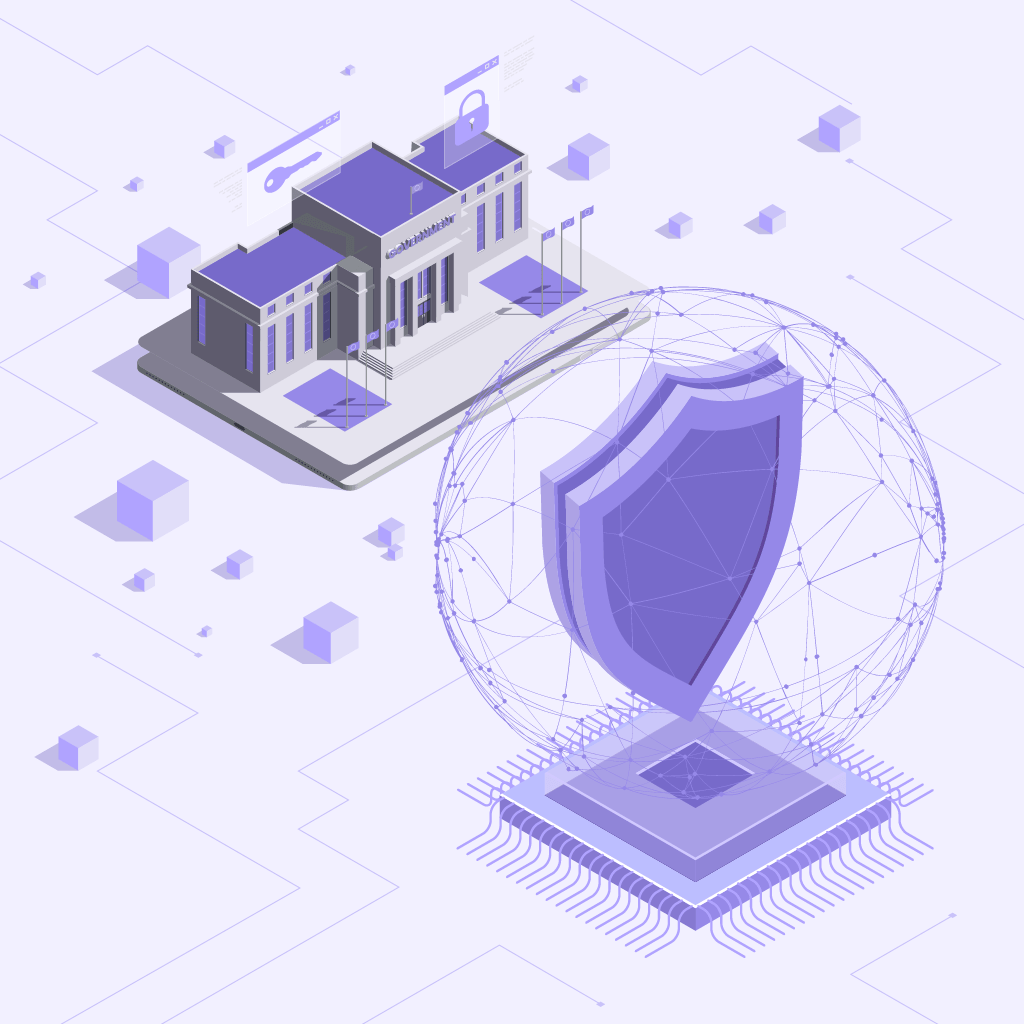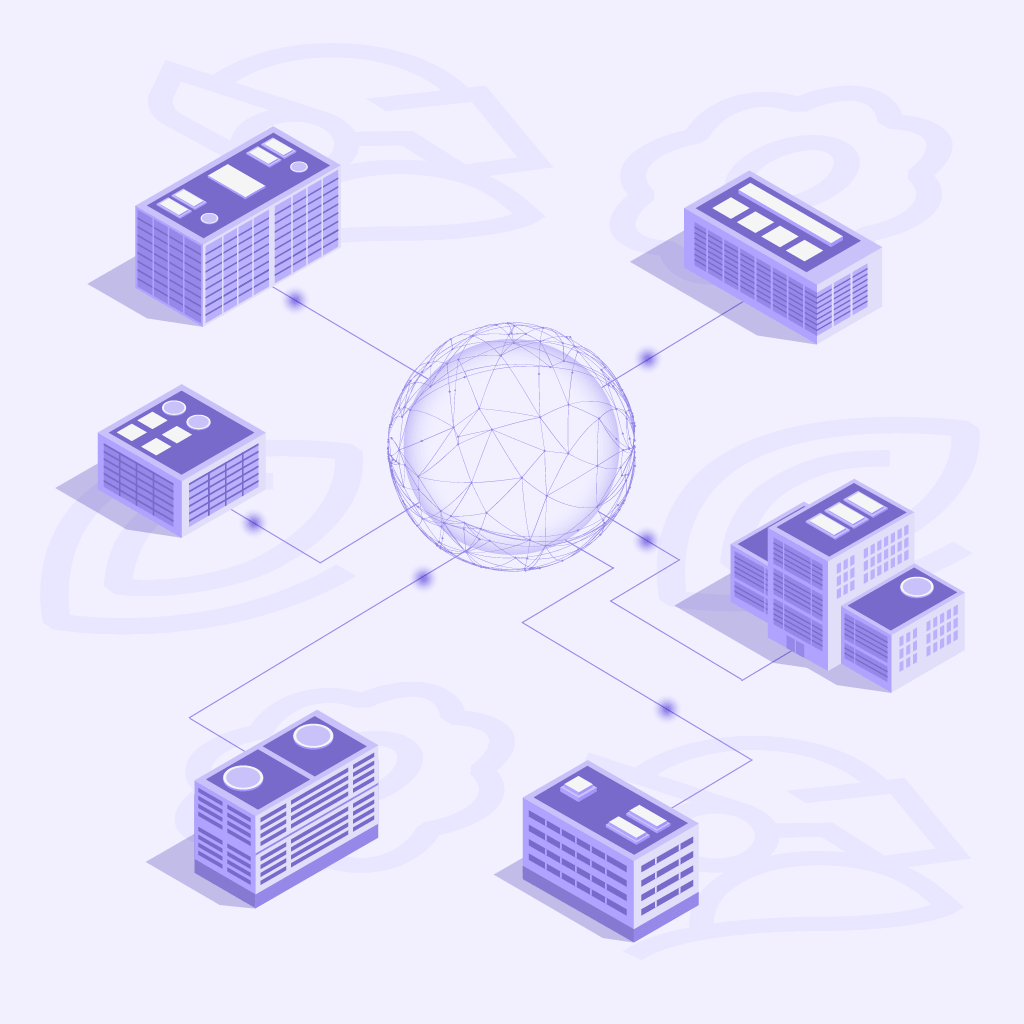


Insurance companies need accurate ML risk models to price policies profitably — but customers and partners restrict access to the sensitive data (medical history, behavior, accident statistics) that makes those models accurate. Privacy-Preserving Machine Learning (PPML) closes this gap with four complementary techniques: Federated Learning (FL) trains across distributed data without transfer; Fully Homomorphic Encryption (FHE) computes on encrypted data; Secure Multi-Party Computation (SMPC) lets multiple insurers train jointly without exposing inputs; Differential Privacy (DP) adds calibrated noise to prevent re-identification. Together: personalized pricing, fraud detection, cross-insurer collaboration — without compliance risk.
How can you offer the best policy without knowing anything personal about the client?
Long before SaaS, "indulgence memberships" to fitness clubs, and the widespread use of business models based on compound interest, insurance was invented.
Insurance, as one ad said, is a thing that is better to have and not need, than to need and not have.
Briefly and cynically, the essence of the insurance business is to collect more money in the form of premiums than to pay out in the form of compensation, by predicting risks. This does not deny the usefulness of insurance services in individual cases.
The more accurate the forecasts, the more favorable conditions you can offer to clients and minimize your risks. That is, the profit of insurance companies depends on the accuracy of predictions. And where there are predictions, there are machine learning models, which need more data to be accurate.
Including data that each individual might prefer to keep secret for various reasons, such as:
- medical history (tests for toxoplasmosis and a tendency to take unnecessary risks),
- hobbies (statistics on parachute jumps and equipment rentals over the past year),
- travel (history of places visited from traditional resorts to flashpoint areas).
You can also find a lot of interesting things from commercial clients:
- real data on hazardous industries and the associated environment,
- statistics on accidents,
- staff turnover.
All this data helps to create more accurate risk models and make the most accurate predictions.
In fact, various state laws are aimed at preserving the confidentiality of data. And in general, it seems that since the emergence of such a concept as personal data, their list has only expanded.
So, here is the task we have:
- Insurance companies need to do better scoring based on their clients' data and data attracted from external sources.
- Personal, confidential, or sensitive data is restricted in free circulation for various reasons.
Questions:
- How to make accurate ML models if there is not enough data?
- How to work with sensitive data, once it has fallen into the hands of insurers, without the risk of sanctions, leaks, attacks, or competitive espionage?
- How to attract partner data without breaking the law?
- How to send existing data for computing in third-party clouds and not bear the risk of losses?
- In the end, how to really protect the model (the fruit of intellectual labor) and monetize it without fear of inversion attacks?
At Guardora, we encountered several cases mentioned below where the insurers needed to protect data and then train ML algorithms on it.
- Offering customers more personalized insurance plans.
- Processing customer medical data to improve the accuracy of risk assessment without compromising personal information.
- Integrating data from multiple sources to create a comprehensive scoring model that takes into account both internal and external factors.
- Preventing fraud and abuse when submitting reimbursement claims.
- Working with insurance claim history to create a model for predicting the probability of an insured event.
- Exchanging data between insurance companies to improve models without violating customer privacy.
- Processing data on customers´ behavior (e.g. via sensors or apps) while maintaining their anonymity.
- Pricing.
The following Privacy Preserving Machine Learning methods, protocols, and approaches are most commonly mentioned in the context of insurance and AI.
| Technique | Description |
|---|---|
| Federated learning | Allows training a distributed model without data transfer. Data does not leave the client loop. |
| Homomorphic encryption | The model is trained on encrypted data without decrypting it. The data is always under reliable cryptographic protection. |
| Secure multi-party computation | Allows participants to train a model together without revealing their data to each other. The data remains secure as no participant has access to the other’s data. |
| Differential privacy | The data is used in training the model with noise added, preventing subsequent identification of individual records. |
If it's so clear, what are the implementation challenges?
There are some problems on the way to widespread use of these technologies:
- Lack of qualified specialists and wide awareness of such technologies.
- Difficulty in integrating new methods into existing infrastructures and processes.
- High costs of implementing and maintaining data protection technologies.
- Scalability issues: technologies can require significant computing resources as data volumes increase.
- Uncertainty of regulatory requirements in different jurisdictions complicates compliance.
- The lack of universal standards and practices in the field of data protection leads to disparate solutions.
Join our community on Discord to discuss more specific use cases from the insurance industry, the combination of different methods and protocols to enhance privacy in machine learning, and meet Privacy Preserving Machine Learning enthusiasts from around the world.
Frequently Asked Questions
How can insurance companies use ML without violating customer privacy?
Insurance companies need ML to predict risk accurately — but the most predictive data (medical history, behavioral patterns, hobby risk profiles) is exactly the data customers and regulators restrict. **Privacy-Preserving Machine Learning (PPML)** resolves this through four primitives: **Federated Learning** keeps data on customer devices/internal systems while training shared models; **Fully Homomorphic Encryption (FHE)** computes on encrypted data; **Secure Multi-Party Computation (SMPC)** enables multi-insurer collaboration without data exchange; **Differential Privacy (DP)** adds noise preventing individual re-identification. Insurers get model accuracy; customers get privacy; regulators get compliance.
What is Privacy-Preserving Machine Learning (PPML) for insurance?
PPML is a class of cryptographic and architectural techniques letting insurers train and deploy ML models without exposing the underlying sensitive data. In insurance specifically, PPML applies to risk scoring (using medical and behavioral data without seeing them in plaintext), personalized pricing (analyzing customer profiles while preserving anonymity), fraud detection (cross-insurer pattern matching without sharing claim details), and partner data integration (combining external data sources without breaking confidentiality agreements). The four core primitives — FL, FHE, SMPC, DP — are typically combined per use case.
How does Federated Learning help insurance scoring?
Federated Learning (FL) lets insurers train scoring models across distributed data sources without moving the data to a central server. **Application 1:** Customer behavioral data from telematics devices (driving patterns, fitness wearables) stays on the device; only model updates flow back. **Application 2:** Multiple insurers federate to train cross-portfolio fraud detection models — each insurer's claim data stays in their perimeter; only encrypted gradients are shared. **Application 3:** Internal data residency compliance — model training happens within regional data centers (EU, US, RU separately) without cross-jurisdictional data transfer. FL satisfies data minimization principles under GDPR and similar regulations.
How can FHE protect insurance customer medical data?
Fully Homomorphic Encryption (FHE) is uniquely valuable for insurance medical data. The customer's medical history can be encrypted on their side before sharing with the insurer. The insurer's risk-scoring ML model computes directly on the encrypted data — calculating premium amounts, identifying risk categories — without ever decrypting the underlying medical records. Only the encrypted result returns; the customer decrypts it client-side. Even if the insurer is breached, no medical data is exposed because the insurer never saw plaintext. Particularly valuable for life insurance, health insurance, and any policy requiring detailed medical underwriting.
Can insurance companies share data between each other safely?
Yes — through **Secure Multi-Party Computation (SMPC)**. Traditionally, inter-insurer data sharing is blocked by privacy law, competitive sensitivity, and customer consent issues. SMPC resolves all three: multiple insurers jointly compute their combined data without revealing inputs to each other. Practical applications: cross-insurer fraud detection (identifying claim patterns across multiple insurers without sharing individual claims), industry-wide risk modeling (combining accident statistics across insurers for better catastrophe models), and aggregate market analysis. Each insurer's competitive intelligence stays private; the joint output is what they need for risk modeling.
How to prevent fraud in reimbursement claims using PPML?
Reimbursement fraud is a multi-billion-dollar insurance problem. PPML enables two complementary approaches. **(1) Federated fraud detection across insurers:** SMPC + FL lets multiple insurers train joint fraud detection models without sharing claim details — catches multi-insurer fraud rings (filing similar claims at different insurers). **(2) Encrypted behavioral analysis:** FHE lets insurers process encrypted claim documents, behavioral data, and transaction history for anomaly detection — without exposing the underlying customer data to fraud analysts. The result: better fraud detection accuracy + protected customer privacy + reduced compliance risk.
What is the role of Differential Privacy in insurance ML?
Differential Privacy (DP) adds mathematically calibrated noise to data, model outputs, or training gradients — providing formal guarantees that individual customer records cannot be reconstructed from aggregated outputs. For insurance: published industry statistics get DP noise (preventing reverse engineering of individual customer data), aggregate risk reports use DP (allowing reinsurance companies to analyze portfolio risk without seeing customer records), and federated models add DP to prevent model inversion attacks (where attackers reconstruct training data from a deployed model). DP is particularly important for **model monetization** — insurers can license risk models to reinsurers or partners while DP prevents data extraction from those models.
What are the main barriers to PPML adoption in insurance?
Six barriers identified. **(1) Specialist scarcity** — limited PPML cryptographic engineers globally. **(2) Integration complexity** — existing insurance ML infrastructure rarely accommodates FHE/FL/SMPC without major architecture changes. **(3) Implementation cost** — both upfront integration and ongoing compute overhead. **(4) Scalability** — FHE in particular has historically been compute-intensive (new hardware accelerators are improving this). **(5) Regulatory uncertainty** — privacy laws vary by jurisdiction; PPML compliance frameworks are still evolving. **(6) Lack of universal standards** — different PPML implementations don't interoperate, fragmenting the market. Solutions: partner with PPML specialists like Guardora, start with single high-value use case (fraud detection, medical underwriting), leverage hardware acceleration trends.