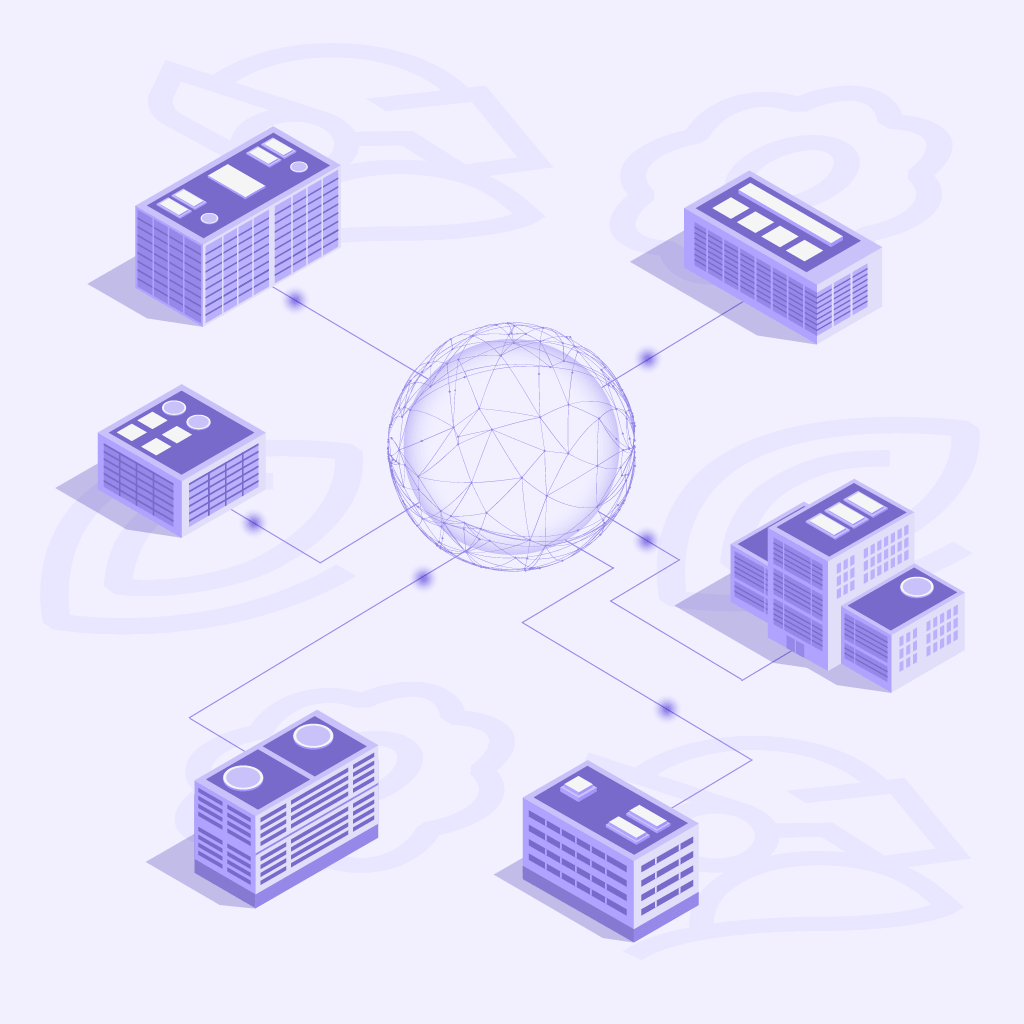


Three core techniques apply: Fully Homomorphic Encryption (FHE) for computing on encrypted data, Federated Learning for joint model training across agencies without data sharing, and Differential Privacy for anonymized analytics. Three primary applications: property valuation models, tenant screening processes, and market analysis. All three are GDPR-compliant by design.
In the rapidly evolving landscape of Property Technology (PropTech) and real estate, the integration of Privacy-Preserving Machine Learning (PPML) is becoming increasingly essential. As the industry embraces data-driven decision-making, the need to protect sensitive information has never been more critical. This article explores how PPML techniques, including fully homomorphic encryption and federated learning, can revolutionize the way property data is utilized while ensuring privacy and security.
Understanding Privacy-Preserving Machine Learning
Privacy-Preserving Machine Learning refers to methodologies that allow machine learning models to learn from data without compromising the privacy of that data. This is particularly relevant in sectors like real estate, where personal and financial information is abundant. Techniques such as fully homomorphic encryption (FHE) enable computations on encrypted data, allowing organizations to analyze information without ever exposing it.
Key Techniques in PPML
Fully Homomorphic Encryption (FHE)
FHE allows computations to be performed on encrypted data, which means that sensitive information remains secure even during processing. This technique is crucial for real estate firms that handle confidential client data.
Federated Learning
This approach enables multiple parties to collaboratively train machine learning models without sharing their raw data. In PropTech, federated learning can facilitate insights from diverse datasets while maintaining individual privacy.
Differential Privacy
By adding noise to datasets, differential privacy ensures that the output of a machine learning model cannot be traced back to any individual data point. This method is vital for protecting tenant and buyer information in real estate transactions.
Applications in the Property Domain
Enhancing Property Valuation Models
Using PPML techniques, property valuation models can be improved by integrating diverse datasets from various stakeholders—such as real estate agents, appraisers, and financial institutions—without compromising privacy. For instance, federated learning can aggregate insights from different agencies while keeping their proprietary data secure.
Streamlining Tenant Screening Processes
Real estate companies can leverage PPML to enhance tenant screening processes. By analyzing encrypted credit scores and rental histories through FHE, landlords can make informed decisions without accessing sensitive personal information directly.
Optimizing Market Analysis
In PropTech, market analysis often relies on vast amounts of data from various sources. PPML allows companies to analyze trends and patterns while ensuring that individual contributors' data remains confidential. This capability not only fosters trust but also complies with stringent data protection regulations.
Benefits of Implementing PPML in PropTech
- Enhanced Security: Protects sensitive customer information throughout the machine learning lifecycle.
- Regulatory Compliance: Helps organizations adhere to regulations such as GDPR by minimizing data exposure.
- Trust Building: Fosters trust among clients by demonstrating a commitment to safeguarding their personal information.
- Data Utilization: Enables organizations to leverage rich datasets for better decision-making without sacrificing privacy.
Conclusion
The integration of Privacy-Preserving Machine Learning techniques in the Property Technology sector represents a significant advancement towards secure and ethical data utilization. By adopting methods such as fully homomorphic encryption and federated learning, real estate firms can enhance their analytical capabilities while ensuring that client privacy remains intact.
Frequently Asked Questions
What is Privacy-Preserving Machine Learning (PPML) in PropTech?
Privacy-Preserving Machine Learning is a set of cryptographic and algorithmic techniques that let property companies and PropTech platforms train and use ML models on sensitive client data — credit histories, rental records, financial information, transaction data — without exposing the underlying data. The three primary PPML techniques relevant for real estate are Fully Homomorphic Encryption (FHE), Federated Learning (FL), and Differential Privacy (DP). PPML solves the central tension in modern PropTech: rich AI-driven analytics require lots of data, but data privacy regulation (GDPR, CCPA) and client trust limit what companies can collect and process. PPML lets you have both: powerful models + true data protection.
Which PPML techniques work for real estate data?
Three techniques apply, each suited to different scenarios.
- Fully Homomorphic Encryption (FHE) — computations happen on encrypted data. Useful when a single party (e.g., a tenant screening platform) processes sensitive credit data on behalf of clients (landlords) without ever decrypting it.
- Federated Learning (FL) — multiple parties (e.g., regional real estate agencies) train a joint ML model without sharing their raw data. Useful for cross-agency property valuation models.
- Differential Privacy (DP) — calibrated statistical noise added to outputs ensures no individual data point can be re-identified. Useful for market analytics reports published from sensitive transaction datasets.
How does FHE improve tenant screening processes?
In a traditional tenant screening flow, landlords or property managers receive prospective tenants' raw credit scores, rental histories, and employment data — sensitive personal information that creates legal liability and trust concerns.
With Fully Homomorphic Encryption, this changes: the tenant submits encrypted credit/employment data to the screening platform; the screening platform computes a risk assessment on the encrypted data without decrypting it; the landlord receives only an encrypted decision (e.g., approved or review required) that they decrypt locally. The landlord never sees the underlying credit score or financial details.
Result: stronger compliance with credit-reporting regulations + dramatic reduction in data-breach risk.
How can federated learning aggregate insights across real estate agencies?
Real estate is highly fragmented — hundreds of regional agencies, each with proprietary client data. A single agency's data is too small to train a high-quality property valuation model. Sharing data raw is impossible (competitive sensitivity + GDPR).
Federated Learning solves this: each agency trains a local model on its own data and contributes only encrypted model parameters (gradients) to a central aggregator. The aggregator combines these into a global valuation model that benefits from the combined data scale — without any agency revealing its actual transaction records, client lists, or pricing strategies. Each agency receives the global model back and deploys it locally. Combined accuracy is significantly higher than any single agency could achieve alone.
Can PPML help comply with GDPR for property data?
Yes — substantially. GDPR Article 4(1) defines personal data as data relating to an identified or identifiable person. Recital 26 clarifies that data rendered truly anonymous falls outside GDPR scope. Two PPML techniques directly support compliance:
- Differential Privacy with appropriate noise budget can produce statistically anonymous data — outside GDPR scope per recent EU case law (Case T-557/20).
- Federated Learning keeps personal data in its origin jurisdiction — only encrypted model parameters cross trust boundaries, which is generally not considered personal data.
- FHE keeps data encrypted at all times — even cross-border transfers of encrypted data are treated more favorably under GDPR than raw personal data.
Together, PPML can transform PropTech ML pipelines from compliance burdens into compliance-by-design systems.
How does PPML improve property valuation models?
Property valuation accuracy benefits enormously from data scale and diversity. A model trained on one agency's 10,000 transactions is fundamentally weaker than one trained on a combined dataset of 1,000,000 transactions across multiple agencies, regions, and property types.
Federated Learning lets agencies achieve the latter without literally sharing data. The combined model captures cross-region patterns (e.g., regional price trends, seasonal effects, demographic shifts) that no single agency could learn alone. FHE further enables joint analytics with financial institutions, appraisers, and tax authorities — each contributing encrypted feature data to the valuation model.
Result: valuations that are demonstrably more accurate while remaining defensibly private.
Is PPML practical for small real estate companies?
Yes, with caveats.
Practical aspects: modern PPML platforms (including commercial offerings like Guardora) abstract away the cryptographic complexity — small companies don't need in-house cryptographers.
- Federated Learning is particularly accessible: a small agency can join an industry consortium and benefit from the shared model without major infrastructure investment.
- FHE has higher compute overhead but remains practical for inference (e.g., per-tenant screening checks) even if too slow for daily mass-training jobs.
- DP is computationally cheap and well-supported in standard ML frameworks.
Caveats: initial integration requires technical alignment between participating parties (feature schema harmonization, security mode selection). The cost-benefit calculus is strongest for small companies who would otherwise miss out on ML-driven competitive advantages entirely.
How can my PropTech company adopt these PPML techniques?
The path depends on your specific scenario.
Step 1 — identify your data privacy bottleneck: is it tenant data exposure (FHE for screening), inter-agency data sharing (FL for joint models), or compliance for published analytics (DP for reports)?
Step 2 — choose PPML primitives: typically one primary primitive plus optional combinations (e.g., FL + DP for cross-agency analytics with statistical privacy guarantees).
Step 3 — assess infrastructure: does the chosen primitive run on your existing cloud setup, or do you need a specialized platform?
Step 4 — pilot: start with a single use case (often tenant screening or single-region valuation), measure accuracy + speed + privacy guarantees, then expand.
For a scoping session, contact Guardora — we work with PropTech companies on FHE, federated learning, and combined deployments.